

What You Will Learn That Others Don’t Share
This guide covers the 4 mineral deficiencies behind night cramps, why blood tests miss low magnesium (only 1% of magnesium is in your blood), the exact forms of magnesium that work best (glycinate vs. citrate vs. oxide), the 2-week test to know if it is truly a deficiency, and the 30-second cramp-stop manoeuvre that beats most medications. Studies show roughly 30% of adults experience nighttime leg cramps at least 5 times a month.
What Are Night-Time Leg Cramps?
They are sudden, painful, involuntary muscle tightenings. They hit mostly the calves, less often the feet or thighs. Cramps usually last seconds to minutes, but the soreness can linger into the next day.
Who Gets Them Most
- Adults over 50
- Pregnant women (up to 40% have cramps)
- Athletes
- People who stand or work on concrete all day
- People on certain medications (diuretics, statins)
- People with diabetes, kidney disease, or vascular issues
Which Deficiency Is to Blame?
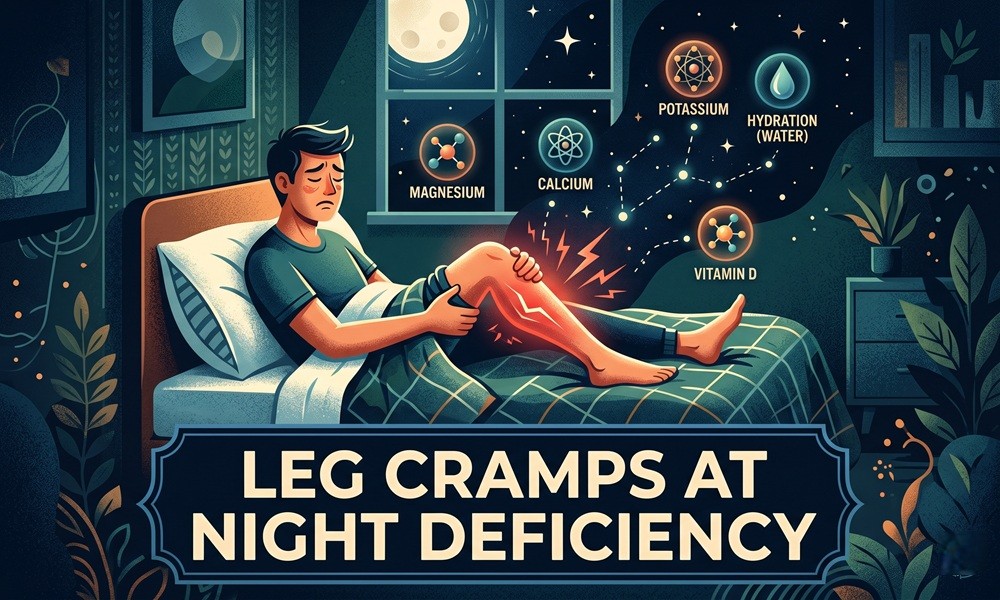
Several mineral deficiencies can trigger leg cramps. Magnesium is the most studied. But potassium, calcium, and vitamin D also matter.
The Big 4 Deficiencies
| Mineral/Vitamin | Role | Best Food Sources |
| Magnesium | Relaxes muscle, regulates nerves | Almonds, pumpkin seeds, spinach, dark chocolate |
| Potassium | Muscle contraction; electrolyte balance | Bananas, sweet potato, beans, yogurt |
| Calcium | Helps muscles contract and relax | Milk, paneer, yogurt, kale, sesame |
| Vitamin D | Helps body absorb calcium and magnesium | Sunlight, eggs, fortified milk, mushrooms |
B vitamins (especially B1, B6, and B12) also play a role.
Magnesium: The Top Suspect
Magnesium is part of 300+ enzyme reactions in the body. It helps muscles relax after contracting.
If magnesium is low, calcium can over-stimulate the muscle and cause spasms.
The catch: Routine blood tests often miss true magnesium deficiency. Only about 1% of body magnesium is in the blood. The rest sits in bones and cells. So normal blood results don’t always mean adequate magnesium.
Signs of Low Magnesium
- Night-time leg cramps
- Eye twitches
- Fatigue
- Anxiety and irritability
- Trouble sleeping
- Constipation
- Headaches
About half of people in the U.S. do not get enough magnesium from diet alone.
Potassium: The Second Suspect
Potassium helps muscles relax and balance electrolytes. Low potassium (hypokalemia) can cause weakness, fatigue, and cramps.
Diuretics, vomiting, and diarrhea can deplete potassium fast.
Signs of Low Potassium
- Muscle weakness and cramps
- Constipation
- Heart palpitations
- Numbness or tingling
Calcium and Vitamin D
Calcium helps muscles contract. Low levels can make muscles twitchy. Vitamin D helps the body absorb calcium and magnesium.
People who stay indoors all day, eat little dairy, or live in colder climates often have low vitamin D.
Other Common Causes of Night Leg Cramps
| Cause | Why |
| Dehydration | Lowers electrolytes |
| Sedentary day | Muscles tighten |
| Overuse or athletic strain | Fatigue triggers spasms |
| Pregnancy | Extra weight, mineral demand |
| Diabetes (neuropathy) | Nerve damage |
| Peripheral artery disease | Poor blood flow |
| Statin medications | Known to cause muscle cramps |
| Diuretics | Deplete magnesium and potassium |
| Kidney disease | Affects electrolyte balance |
| Poor sleep posture | Compressed nerves |
The 30-Second Cramp-Stop Manoeuvre
When a cramp strikes:
- Sit up and straighten the leg
- Flex the foot – point toes back toward your knee
- Hold for 20-30 seconds
- Massage the calf with firm strokes
- Stand and walk a few steps if you can
This stretches the calf muscle and breaks the spasm. Works better than most medications.
Long-Term Prevention: Step by Step
Step 1: Hydrate Through the Day
Aim for 8 glasses of water. Add a pinch of salt or electrolyte powder if you sweat a lot.
Step 2: Eat Mineral-Rich Foods Daily
| Meal | Add This |
| Breakfast | Banana with yogurt or oats |
| Lunch | Spinach or sautéed greens |
| Snack | A handful of almonds or pumpkin seeds |
| Dinner | Beans, sweet potato, or paneer |
| Bedtime | Warm milk or kefir |
Step 3: Stretch Before Bed
A 5-minute calf stretch routine can cut cramps by half.
Try this:
- Stand facing a wall
- Place hands flat on the wall
- Step one leg back, heel pressed down
- Hold 30 seconds; switch sides
- Repeat twice
Step 4: Consider a Magnesium Supplement
Many experts suggest magnesium glycinate for cramps – easy on the gut and well absorbed. Start with 100-200 mg in the evening.
Step 5: Check Vitamin D Levels
A simple blood test. Levels below 30 ng/mL often need supplementation.
Step 6: Review Medications
If you take diuretics, statins, or birth control pills, ask your doctor if these could be causing cramps.
Which Magnesium Supplement Should You Try?
| Form | Best For | Notes |
| Magnesium glycinate | Sleep and cramps | Gentle, well absorbed |
| Magnesium citrate | Mild constipation too | Can loosen stool |
| Magnesium malate | Daytime fatigue | Energy support |
| Magnesium oxide | Cheap option | Poorly absorbed |
| Magnesium chloride | Topical or oral | Bioavailable |
Tip: Take in the evening for cramp prevention and better sleep. Give it 2-6 weeks to work.
Foods Highest in Magnesium
| Food | Magnesium per Serving |
| Pumpkin seeds (1 oz) | 168 mg |
| Almonds (1 oz) | 80 mg |
| Spinach (1 cup cooked) | 157 mg |
| Cashews (1 oz) | 74 mg |
| Black beans (1 cup) | 120 mg |
| Dark chocolate (1 oz) | 65 mg |
| Avocado (1 medium) | 58 mg |
| Banana (1 medium) | 32 mg |
| Yogurt (1 cup) | 47 mg |
Aim for 310-420 mg per day depending on age and gender.
Foods Highest in Potassium
| Food | Potassium per Serving |
| Sweet potato | 540 mg |
| Banana | 420 mg |
| Spinach (cooked) | 840 mg |
| Beans | 600+ mg |
| Yogurt | 380 mg |
| Avocado | 720 mg |
| Coconut water | 600 mg |
The Epsom Salt Soak
Soaking feet and legs in warm water with half a cup of Epsom salt (magnesium sulfate) for 15-20 minutes can ease tightness. Some magnesium absorbs through the skin.
Do this 2-3 times a week before bed.
When to See a Doctor
Most cramps are harmless. But see a doctor if:
- Cramps happen more than 3 nights a week
- Cramps come with swelling, redness, or warmth
- One leg looks different from the other
- Cramps with numbness or weakness that doesn’t go away
- Cramps with diabetes or kidney disease
- Cramps after starting a new medication
A doctor may run blood tests for electrolytes, vitamin D, B12, kidney function, and thyroid.
Cramps and Serious Conditions
Sometimes, frequent leg cramps can be a sign of:
- Peripheral artery disease (PAD) – narrow leg arteries
- Diabetic neuropathy – nerve damage
- Restless legs syndrome – different but related
- Hypothyroidism – slows nerve function
- Liver or kidney disease – affects electrolyte balance
- ALS or Parkinson’s – rare but possible
Don’t ignore daily cramps. Get them checked.
Smart Habits to Reduce Night Cramps
- Stay hydrated – water and electrolytes
- Stretch before bed
- Sleep with loose covers – tight blankets can curl toes and trigger cramps
- Wear supportive shoes during the day
- Avoid excess alcohol and caffeine – they deplete minerals
- Eat mineral-rich foods daily
- Take a magnesium supplement if needed
- Get sunlight for vitamin D
- Manage diabetes if you have it
- Stay active – walking improves circulation
Frequently Asked Questions
Which deficiency most often causes leg cramps at night?
Magnesium deficiency is the most common. Potassium, calcium, and vitamin D also play big roles.
How quickly does magnesium stop leg cramps?
Some people feel improvement in a few days. Most need 2-6 weeks of consistent intake.
Are bananas enough to stop cramps?
Bananas help with potassium, but you also need magnesium and calcium. Eat a mix of foods.
Can dehydration alone cause cramps?
Yes. Even mild dehydration lowers electrolytes and triggers spasms.
Should I see a doctor for leg cramps?
If they happen often, last long, or come with other symptoms – yes.
Are leg cramps a sign of diabetes?
They can be. Diabetes causes nerve damage and electrolyte shifts that lead to cramps.
Can pregnancy cause leg cramps?
Yes. Up to 40% of pregnant women get them, especially in the third trimester. Magnesium and calcium needs rise during pregnancy.
Is Epsom salt soaking effective for leg cramps?
Yes, for many people. It is safe, cheap, and relaxing. Combine with oral magnesium for best results.