

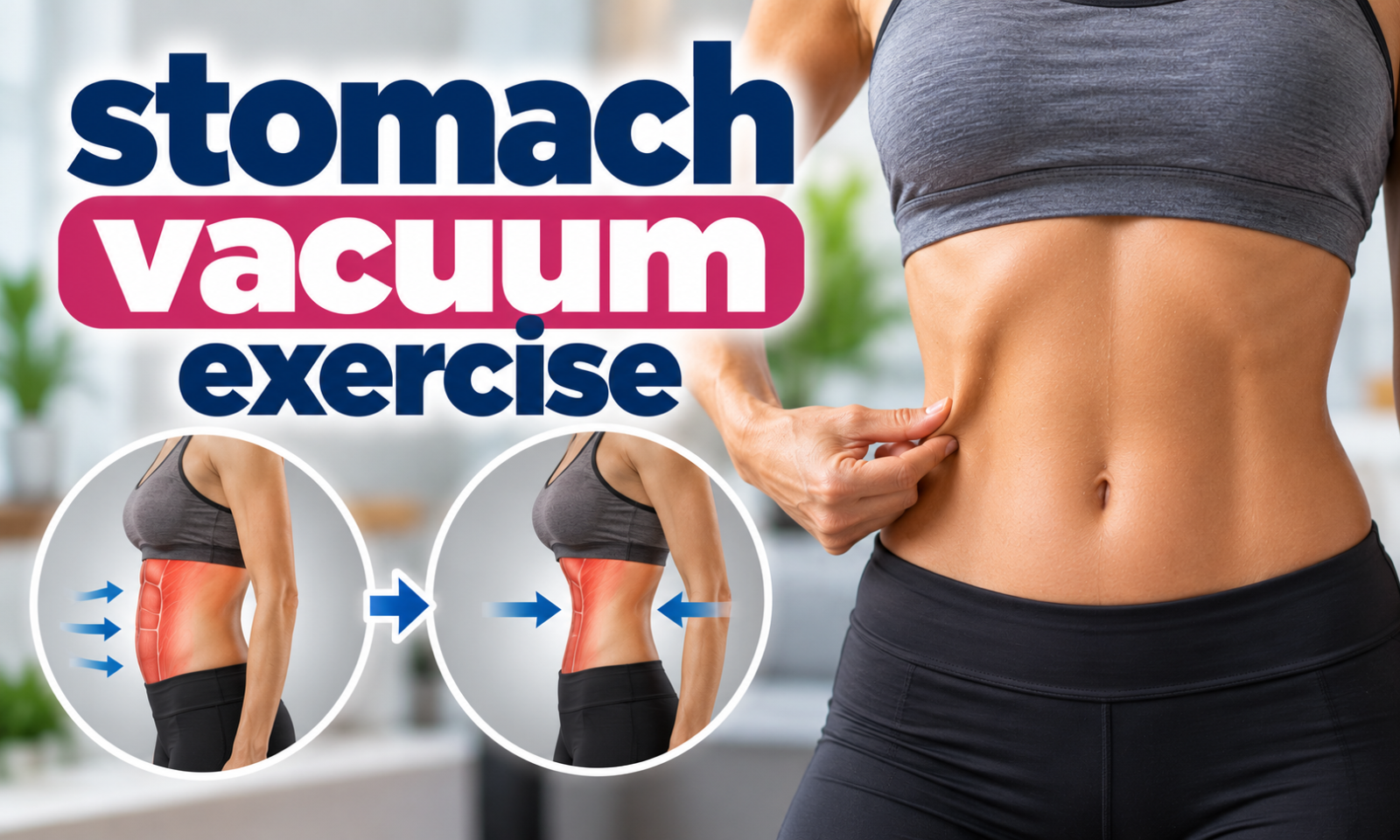
The stomach vacuum exercise is a deep-core movement that teaches you to contract the transversus abdominis, the innermost abdominal muscle that wraps around the trunk like a supportive belt. It is popular in bodybuilding and physical therapy because it requires no equipment and can help improve awareness of the deep abdominal wall. However, it is not a shortcut for losing belly fat or creating visible abs. Its main value is improving core control and helping you learn how to engage the muscles that support the spine during movement.
For most healthy adults, the exercise can be added to a broader strength and activity routine. The key is to draw the lower abdomen inward gently while continuing to breathe, rather than forcefully sucking in the stomach or holding the breath. Done correctly, the movement should feel controlled rather than strained.
What Is the Stomach Vacuum Exercise?
The stomach vacuum exercise is also called abdominal hollowing or the abdominal drawing-in maneuver. It primarily targets the transversus abdominis, often shortened to TrA. This muscle lies beneath the rectus abdominis, the muscle associated with the visible “six-pack,” and beneath much of the oblique musculature.
Because the transversus abdominis helps create tension around the trunk, learning to activate it can contribute to spinal support and coordinated core function. The diaphragm, pelvic floor, multifidus, and oblique muscles also participate in trunk stabilization, so the stomach vacuum is best viewed as one core-control exercise rather than a complete core program.
How Do You Perform a Stomach Vacuum Correctly?
The lying position is usually the easiest place to learn the movement because the floor provides support and makes it easier to focus on the abdominal contraction.
- Lie on your back with your knees bent, feet flat on the floor, and spine in a comfortable neutral position.
- Take a relaxed breath in through your nose.
- As you slowly exhale, gently draw the lower abdomen inward, as if bringing the area below the belly button toward the spine.
- Keep your ribs, shoulders, and pelvis as still as possible. Do not crunch forward or tuck the pelvis aggressively.
- Continue breathing normally while maintaining the gentle contraction for about 10 to 20 seconds at first.
- Relax fully, breathe normally, and repeat two or three times.
As control improves, a hold can gradually be extended toward 20 to 30 seconds. Quality matters more than duration. If you cannot breathe comfortably, reduce the intensity of the contraction or shorten the hold.
Which Muscles Does It Work?
The main target is the transversus abdominis. The exercise may also involve the internal and external obliques, diaphragm, pelvic floor, and multifidus muscles as part of coordinated trunk stabilization. This is why proper breathing is important. The goal is not simply to make the waist look smaller for a few seconds, but to create controlled deep-core tension while the respiratory system continues to work normally.
What Are the Potential Benefits?
Research on core-stabilization programs suggests that training deep trunk muscles can improve transversus abdominis activation and may help some people with nonspecific low back pain. A randomized trial indexed by PubMed found improvements in transversus abdominis activation and timing after a core-stability program that included the abdominal drawing-in maneuver. That does not mean stomach vacuums alone treat back pain, but it supports their use as one component of a structured core program.
| Potential benefit | What it realistically means |
| Better deep-core awareness | Helps you learn how to engage the transversus abdominis during exercise and daily movement. |
| Improved trunk control | May support more coordinated bracing and stabilization when combined with other core exercises. |
| No-equipment training | Can be performed lying, kneeling, seated, or standing without gym equipment. |
| Possible support in rehab | Deep-core training may be included in clinician-guided programs for some people with low back pain. |
| Not a fat-loss exercise | It does not selectively burn belly fat or replace aerobic activity, strength training, and nutrition. |
Can Stomach Vacuums Flatten Your Stomach?
They can improve muscular control and may make the waist feel more supported while the muscle is contracted, but they do not remove abdominal fat. Spot reduction is not how fat loss works. If reducing body fat is a goal, the bigger factors are overall calorie balance, regular physical activity, adequate sleep, and a sustainable eating pattern.
For general health, the U.S. Physical Activity Guidelines for Americans recommend that adults aim for 150 to 300 minutes of moderate-intensity aerobic activity per week, plus muscle-strengthening activity on at least two days each week. A stomach vacuum can fit inside that plan, but it should not replace full-body strength training or aerobic exercise.
What Are the Best Positions for Beginners and Advanced Users?
| Position | Difficulty | When to use it |
| Lying on your back | Beginner | Best for learning the contraction with minimal postural demand. |
| Hands and knees | Beginner to intermediate | Adds gravity and can make the abdominal draw-in easier to feel. |
| Seated | Intermediate | Requires more postural control while keeping the torso upright. |
| Standing | Intermediate | Useful for practicing core control in a functional position. |
| During other exercises | Advanced | Only after you can maintain normal breathing and good form without over-bracing. |
How Often Should You Do Stomach Vacuums?
A simple starting point is two to three sets of 10 to 20 seconds, three or four days per week. Once the movement feels natural, holds can gradually increase toward 20 to 30 seconds. More is not automatically better. The purpose is to improve control, not to keep the abdomen pulled in all day.
Pair the exercise with movements that train the rest of the core, such as dead bugs, bird dogs, side planks, carries, squats, and appropriately progressed resistance exercises. A balanced program trains the trunk to resist extension, rotation, and side bending instead of relying on one isolated contraction.
What Mistakes Should You Avoid?
- Holding your breath. You should be able to breathe gently while maintaining the contraction.
- Forcefully sucking in the stomach. The goal is controlled muscular activation, not simply pulling the belly inward as hard as possible.
- Rounding the shoulders or hunching forward. Keep the torso in a comfortable, neutral position.
- Tilting the pelvis excessively. Avoid turning the exercise into a crunch or posterior pelvic tilt.
- Using it as your only ab exercise. The deep core benefits from a variety of movements and progressive resistance.
- Expecting targeted fat loss. A smaller waistline depends on many factors, and no single abdominal exercise can selectively remove fat.
Who Should Be Careful With This Exercise?
Most healthy adults can practice gentle abdominal drawing-in, but some people should get individualized guidance first. This includes people recovering from abdominal or pelvic surgery, those with a known hernia, significant pelvic floor symptoms, unexplained abdominal pain, or persistent low back pain. Pregnancy and the postpartum period also change abdominal-wall and pelvic-floor demands, so a physical therapist or other qualified clinician can help determine the right approach.
Stop if the exercise causes pain, dizziness, unusual pressure, shortness of breath, or worsening pelvic floor symptoms. If you are using it as part of treatment for back pain, a clinician can help determine whether hollowing, bracing, or another strategy better matches your condition.
A Simple 5-Minute Beginner Routine
| Time | Activity |
| Minute 1 | Relaxed diaphragmatic breathing in a comfortable lying position. |
| Minute 2 | Two stomach-vacuum holds of 10 to 15 seconds with full relaxation between holds. |
| Minute 3 | Two more holds, focusing on normal breathing and keeping the pelvis still. |
| Minute 4 | Perform 4 to 6 slow dead-bug repetitions per side, if comfortable. |
| Minute 5 | Finish with relaxed breathing and note whether you can activate the deep core without straining. |
Frequently Asked Questions
Does the stomach vacuum exercise burn belly fat?
No. It strengthens and improves awareness of deep abdominal muscles, but it does not selectively burn fat from the waist. Fat loss requires an overall energy deficit and a broader activity and nutrition strategy.
Should you do stomach vacuums on an empty stomach?
You do not have to. Some people find the exercise more comfortable before a large meal because the abdomen feels less full, but the exercise is not more effective for fat loss when performed fasted.
How long should you hold a stomach vacuum?
Beginners can start with about 10 to 20 seconds while breathing normally. With good control, holds can gradually reach about 20 to 30 seconds. Stop earlier if you need to hold your breath or strain.
Can stomach vacuums give you a six-pack?
Not by themselves. Visible abs depend on rectus abdominis development, overall body-fat levels, genetics, and other factors. Stomach vacuums primarily train deep-core control.
Are stomach vacuums good for lower back pain?
Core-stabilization exercises can help some people with nonspecific low back pain, and research has shown improvements in deep trunk muscle activation. However, back pain has many causes, so persistent or severe symptoms should be evaluated rather than self-treated with one exercise.
Can you do stomach vacuums every day?
Some people can tolerate frequent low-intensity practice, but daily training is not necessary. A few focused sessions each week are usually enough to practice the skill while leaving room for a balanced core and full-body program.
The Bottom Line
The stomach vacuum is a simple exercise for learning to activate the transversus abdominis and improve deep-core awareness. The best version is the one you can perform while keeping your spine comfortable, your pelvis steady, and your breathing relaxed. Start with short holds, progress gradually, and combine the movement with full-body strength training and aerobic activity.
It can be useful, but its benefits are often overstated online. Think of the stomach vacuum as a core-control drill, not a belly-fat solution. If it causes pain or pressure, or if you have a condition affecting the abdomen, back, or pelvic floor, get individualized guidance before continuing.