

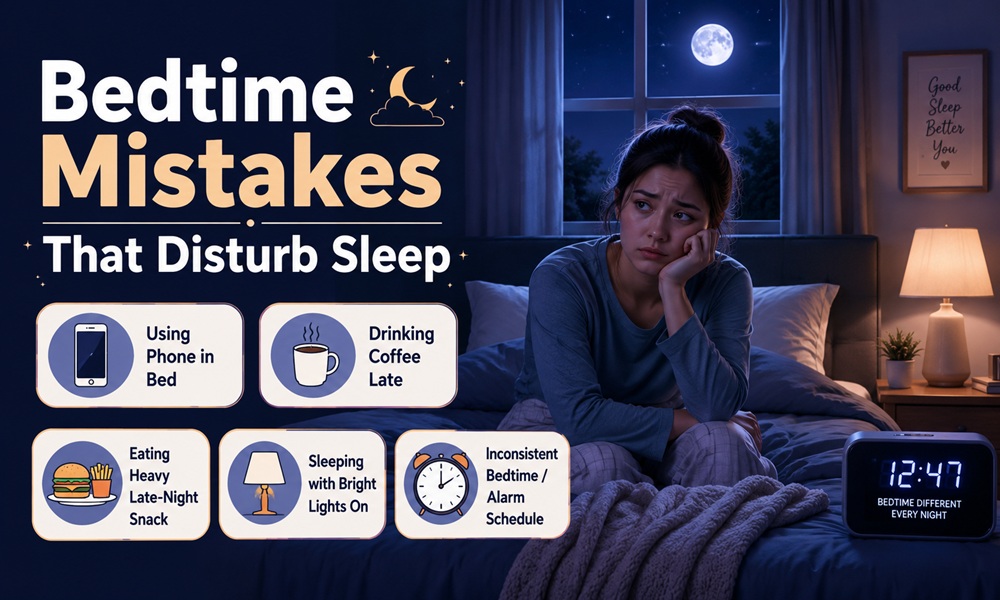
Good sleep starts long before your head hits the pillow. The hours leading up to bed either prime your body to rest or quietly sabotage it. Walk through a typical evening below and you’ll likely spot a mistake or two you can fix tonight.
From about 3 hours before bed
- Mistake: a large, late, heavy meal. Big or spicy meals close to bedtime force your body to digest when it should be winding down, raising core temperature and inviting acid reflux. Fix: finish substantial meals 2-3 hours before bed; keep late snacks light.
- Mistake: late caffeine. Caffeine lingers for hours, and even afternoon coffee can shorten deep sleep for sensitive people. Fix: cut off caffeine by mid-afternoon.
- Mistake: a nightcap. Alcohol helps you nod off but fragments the second half of the night, causing early waking. Fix: keep alcohol well away from bedtime.
From about 1-2 hours before bed
- Mistake: bright screens and scrolling. Blue light suppresses melatonin, the hormone that signals sleep, and stimulating content keeps the brain alert. Fix: dim the lights and stop screens 60-90 minutes before bed; charge your phone outside the bedroom.
- Mistake: intense late workouts. Vigorous exercise close to bed raises heart rate and temperature. Fix: finish hard workouts about 3 hours before bed; gentle stretching or yoga is fine.
- Mistake: working or doom-scrolling in bed. Using your bed for work, TV and phones trains your brain to see it as an alert zone, not a rest zone. Fix: keep the bed for sleep and intimacy only.
At bedtime
- Mistake: an inconsistent schedule. Going to bed and waking at different times, including weekends, confuses your internal clock and makes falling asleep harder. Fix: keep a steady wake-up time every day, even after a bad night.
- Mistake: a room that’s too warm or too bright. Your body needs to cool to fall asleep, and stray light disrupts it. Fix: keep the room cool, dark and quiet; use blackout shades or an eye mask.
- Mistake: clock-watching and trying to force sleep. Staring at the time fuels anxiety, which is the enemy of sleep. Fix: turn the clock away. If you’re awake 20+ minutes, get up, do something calm and dim, and return when sleepy.
A 5-step wind-down that works
- Set a digital curfew: screens off 60-90 minutes before bed.
- Dim the lights to cue melatonin.
- Do something calm: read a physical book, stretch, or breathe slowly.
- Cool the bedroom and make it dark and quiet.
- Keep the same wake-up time tomorrow, no matter what.
Why these small changes work
Two systems decide how easily you fall asleep. The first is sleep pressure: a chemical called adenosine builds up the longer you’re awake and makes you drowsy. Caffeine blocks it, which is why a late coffee keeps you wired. The second is your circadian rhythm, an internal 24-hour clock set largely by light. Bright screens at night tell that clock it’s still daytime, so melatonin release is delayed and you lie there wide awake.
This is why timing matters as much as effort. You can’t force sleep, but you can remove the signals that block it: cut late caffeine, dim the lights, cool the room, and keep a steady wake-up time so both systems line up.
Try this: If your mind races at night, keep a notepad by the bed. Writing down tomorrow’s worries or to-dos parks them on paper so your brain stops rehearsing them.
Frequently asked questions
How long before bed should I stop looking at screens?
Aim for 60 to 90 minutes. That gives melatonin time to rise naturally. If that feels impossible, at least switch on night mode, lower the brightness, and avoid stressful or stimulating content.
Is it bad to lie in bed awake trying to sleep?
Yes. Staying in bed awake for long stretches trains your brain to associate the bed with frustration. If you’re still awake after about 20 minutes, get up, do something calm in dim light, and go back only when you feel sleepy.
Does napping during the day ruin night-time sleep?
A short nap of 20 minutes early in the afternoon is usually fine. Long or late naps, though, lower your sleep pressure and make it harder to fall asleep at night.
One modern trap worth naming: “revenge bedtime procrastination,” staying up late on your phone to claim personal time after a busy day. It feels deserved but steals the rest you need. Protecting that last hour is one of the highest-return changes you can make.
If you consistently can’t fall or stay asleep despite good habits, or you snore loudly and wake unrefreshed, talk to a doctor; an underlying issue like insomnia or sleep apnea may need treatment.